39. Подготовка приключения
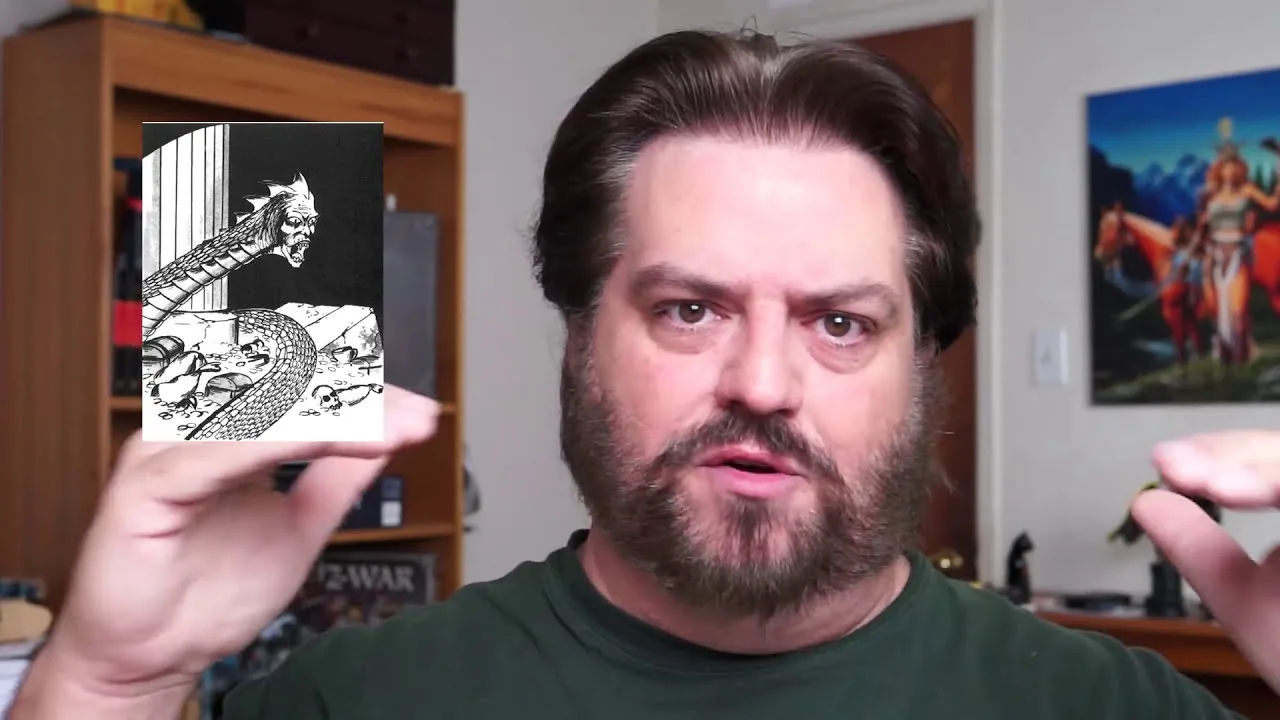
Оригинал (English)
All right, let's prep an adventure. Hey everybody, Matt Colville here. There's a contest at the end of this video — put a timestamp in the doobly-doo. Do not bother commenting; commenting does not enter you into anything. Obviously you can comment if you want to say something about the prepping-an-adventure video, but we're getting close to 100,000 subscribers, and so I thought it would be fun to do another giveaway.
In the meantime, we're going to talk about prepping Against the Cult of the Reptile God. I picked that adventure as our example because it's one I know pretty well, and I think it's a great starting adventure: it's got a cool mystery, and it also gives us a chance, following up on the verbs video, because Against the Cult of the Reptile God is one of those adventures that I think doesn't have a good verb in it, and you're going to see how I fix that. So we'll talk about how you hook the players and what I do.
It's a pretty straightforward process. For an adventure like Against the Cult of the Reptile God, which is only about 27, 28 pages, I would probably only spend an hour or two prepping. And this is why I hope this is going to be a short video: all I do is prep for the first session. I don't prep the entire adventure. And that's the first lesson, I guess: it's super unusual that I will read the entire adventure from cover to cover. I've bought a lot of adventures that explicitly say you need to do that — like, step one, read this entire adventure from cover to cover. I don't know that I've ever done that, just because it's actually kind of antithetical to the reason I run adventures.
I run adventures. I know a lot of people don't. I know a lot of people in fact think it's virtuous to roll your own and build your own adventures. I don't think one way is better than the other. Obviously, if you create your own adventure, then you know it like the back of your hand, you don't have to read anything. But it's a lot of work for me, and especially because I'm not a cartographer — I don't want to sit there drawing maps and stuff like that. It's much easier for me to buy an adventure and just skim through it, spend a couple of hours getting enough prepped to run the first session, and then every week I just read a little bit more, make some more notes, and I'm always just trying to prep the next chunk of content.
So that's the first secret: you don't need to read the entire adventure. You only need to read enough to know what's going on. And even though that seems like a cheat, even though there will be people who will be like, "You can't do that," I almost always end up prepping even more than I need. I prep this much thinking, "Okay, now this is enough for one night, and the players only get this far," so I end up with a couple of weeks prepped ahead of time, even though I only spent a couple hours getting ready.
With an adventure like Against the Cult of the Reptile God, typically the first thing I do is I read the front cover and the back cover, because I'm trying to find two critical pieces of information. The first is: what is this adventure about? And you'd be surprised at how often it is difficult to find that out just by reading the adventure starting on page one. Often it's more useful to look at the front or back cover, because that's where there's a great synopsis, and the synopsis explains everything that you're going to see in the adventure.
In fact, let's zoom in on this cover and see. It says: "Terror by night! The village of Orlane is dying. Once a small and thriving community, Orlane has become a maze of locked doors and frightened faces. Strangers are shunned, trade has withered, rumors flourish, growing wilder with each retelling. Terrified peasants flee their homes, abandoning their farms with no explanation. Others simply disappear. No one seems to know the cause of the decay. Why are there no clues? Who skulks through the twisted shadows of the night? Who or what is behind the doom that has overtaken the village? It will take a brave and skillful band of adventurers to solve the dark riddle of Orlane." Okay, I get it — there's a mystery of some sort in the town of Orlane. And again, this is one of the reasons I picked this, because we're going to talk about how to improve the verbs that the adventure gives you.
The other thing the front cover tells me that is useful for figuring out whether or not I want to use this — whether there's any point in continuing to read further — is what level it's for. This says it's for four to seven adventurers of first to third level, which means it's a low-level adventure. If my players were fifth or seventh level, I probably wouldn't even read any further. I'd say, okay, I'll come back to this later when I'm starting a new campaign.
The next thing I want to do is figure out how long this adventure is. Literally, what is the page count? Because that tells me a lot about how long it's going to take to run, how long it's going to take to read, and also what level the players are going to come out the other side of it. Obviously, the longer the adventure is, the higher level they will be when they finish it. And I find that most adventures fall into one of three categories. Either they're very short — literally on the order of two to twelve pages long, and that would be a Dungeon Magazine adventure. I don't think they still have Dungeon Magazine, but they used to. There's a huge backlog — if you're looking for adventures, there's a huge backlog; for years, decades, they published a magazine called Dungeon Magazine, and it would literally have three to five adventures in it. So most adventures are either really short, or they're about 28 to 32 pages, or they're like 128 pages. So it's going to take one or two nights, or it's going to take two or three months, or it's going to take a year and a half.
So we know how long it is, we have a vague idea of what's going on in this adventure, and we know what level it's for. It's time to actually start taking it apart and seeing what is useful. And for that, here's my next trick: I do not start reading the adventure at the beginning. I start at the back. And the reason I start at the back is because I want to know who is the bad guy. Typically, starting from the back and reading backwards in order to find out who the bad guy is, is the fastest way to figure out what's going on in this adventure. Who is the bad guy, and what do they want? This information is often not at the very front of the adventure. Typically the very front of the adventure is all this backstory about the world or the town or the characters, and I find a lot of that stuff — a lot of authors, and this is not just true of adventure authors, it's true of all writers everywhere — think that in order for you, the consumer, to appreciate their brilliance, you have to know everything they knew when they were creating the work. And that is nonsense.
So I want to know who the players are going to fight. Who is the bad guy, and what do they want, what are they trying to do? So I start at the back and I read backwards. And if you do that with Against the Cult of the Reptile God, you only go two or three pages before you find explicitly who the bad guy of the adventure is. It tells you who she is and what she wants. It turns out she's a spirit naga, and if you go into the Monster Manual, a spirit naga is like a ninth-level bad guy or something like that. So obviously I'm going to have to do a little bit of work and level down Explictica Defilus to make her fightable. I'm going to keep her a spirit naga, she's just not going to have as many hit points, she's going to be a little bit easier to hit, her abilities are going to stay the same, they're just not as likely to work, because they're going to be tuned for a first, or probably by the time they get to her, a third-level party. I've just got that in the back of my head. I could actually do that on the fly when the players actually get there. I'm not going to do any work to fix Explictica if I lose the bad guy.
And this gets to another reason why I like buying and using adventures: because if you go through Against the Cult of the Reptile God, you get to fight this famous monster from Dungeons & Dragons. If you look in the Monster Manual, there's a quote from Explictica Defilus in the Nagas section. So I like running classic adventures, because it gives this feeling that we're all in a shared world together, that we're all experiencing playing D&D together, and it gives the players this communal language to talk about their experience.
So we haven't really done much work — that's probably only about 10 or 15 minutes of reading — and we already have a vague idea of what's going on in the adventure. It's about a town and a curse, and we know that somewhere out there — we don't know exactly where — is a spirit naga who's responsible for all of it. So now we start at the front and start reading forward, and not unusually, we get a whole bunch of text at the front of Against the Cult of the Reptile God about what is D&D, how to read these stats, none of which I need, and then we have the history of the area, which I don't need, especially because I don't run Greyhawk, which is where this was originally set. So I skip a lot of stuff.
I remember Elmore Leonard. One of the best pieces of advice I ever read on writing was when somebody asked Elmore Leonard why his stuff was so punchy and so much easier to read than all the other stuff they read. Leonard said, "I don't write the stuff people tend to skip." And that resonated with me, because when I'm reading a novel, I often skip stuff. If I see that there are pages and pages of no dialogue and no action, I get bored. I did this especially when I was a teenager, I do it less now. But that notion that you have to read the entire adventure in order to understand it is just not true. And I think maybe that's one of the reasons it's not as onerous a task for me to run an adventure. If you're one of those people, if you're a completist, if you feel like "I have to read everything," then yeah, I can understand why running an adventure would kind of be a pain in the butt. But I'm here to give you permission not to do that.
Remember that if it turns out you get to a point in the adventure where you're confused, the adventure is referencing stuff you don't understand, you can always go back and read the stuff you skipped. The answer might be in there. And I have found, every once in a while — I'd say maybe like 10 or 15 percent of the time — there is an answer, something important that I skipped in a section. But I can just go back and read it again. It's not a big deal.
So we have the introduction, we skip that. We have the DM background, we skip that. And now we're onto Notes for the DM. These are bad header titles, by the way, because none of those three header titles really gives me an idea of what I'm about to read. But the Notes for the DM, which is the end of the first page, after several hundred words — the Notes for the DM is the first point in Against the Cult of the Reptile God where they really start spelling out what is going to happen. And they explain that you're going to spend the first third of the adventure in this town, Orlane, exploring, investigating, talking to townsfolk, trying to figure out what's going on. You're going to eventually discover that there's a cult to this reptile, Explictica Defilus, in the swamp, and the second part of the adventure is getting to the swamp, and the third part of the adventure is a two-level dungeon in the swamp. And at that point I feel like I have a pretty good idea what's going on in this adventure. And again, we haven't done much work yet.
Moving forward, we discover there's a key to the town. We have a map of the town, and all the buildings in it are labeled, and here are the descriptions for those labels. It's all the townsfolk. And again, this is an old-school adventure where they're expecting any thieves in the party to be practicing pickpockets and stuff like that, so all of the villagers have all of their cash detailed here. I don't need that information, but I'm going to go through this section. I'm not going to read every single entry, I'm just going to skim it, and I'm going to see which of these NPCs are useful to me, which ones the players are likely to want to go talk to, who the movers and shakers in town are. For instance, there's like a carpenter and a moneylender, and they're described in here, but I don't think the players are likely to go talk to them, so I'm not going to make any notes on that section. Since this is all written down anyway, if the players later on during the course of the adventure, while we're playing, decide they want to go talk to the moneylender — like, for instance, they got some gems from the dungeon or whatever and they want to exchange it for gold — that's fine, that's when I will read the section. I'll do it at the table. There's plenty of time to read the adventure at the table, because your players are often going to be spending time arguing and debating what to do.
So at this point I actually start making notes. I create a Word document, and I start writing it. And you can look at that Word document — there's a link in the doobly-doo — and this is literally what my notes look like. This is not something I tailored for anybody but me. And you can see I called out some of the townsfolk, not all of them, the ones I thought were important, and in some cases I renamed them, because I didn't like the names in the adventure. That's probably what I spend most of my time doing, by the way, when I'm prepping an adventure — just renaming things so that they fit my world.
You can see in my notes that I only pick a handful of townsfolk and flesh them out and make notes on them, because I think that's all I'm going to need. Specifically, I grabbed the first farmer on the list, Farmer Hewitt, and I wrote about him and his family. I gave names to his wife and his kids, and I wrote about his attitude and what he thinks. And for me — and this is maybe an important point — for me, the act of writing something down fixes it in my mind, so that usually I don't need to refer to it later. I just print my notes out and I glance at them and I refresh my memory. I'm not literally reading my notes. And I try to avoid giving speeches in my notes. I do it every once in a while, but I try to avoid dialogue in my notes. I prefer to use bullet points, because if I have it all spelled out, then I feel like I have to read it, I have to stop talking to the players and read what it says in my notes to them, and it's more fun to roleplay things dramatically. So I tend to avoid keeping track of dialogue.
It takes me probably about 45 minutes to an hour to go through all the characters in Orlane and pick out the ones that I think are going to be useful. For instance, the mayor is going to be useful to me. The bad guy — I renamed him Colm Dalgleish — is going to be useful to me. I mentioned Farmer Hewitt. There's also a couple of different inns in town, there's a good-guy inn and a bad-guy inn, and there's a lot of cool stuff that happens at the bad-guy inn, so I make sure that the players are going to find out about the bad-guy inn first, and then if things go wrong there, they'll find out about the good-guy inn. Because I don't want them to go to safety first. I want that to be a refuge. I want them to get in danger first.
Somewhere in this process — I don't know exactly where, typically toward the front, as I'm reading this key to Orlane — I start annotating the map. The adventure PDF comes with a map, and it's split across two pages, so I bring it into Photoshop. I use Photoshop all the time for this stuff, by the way, I can go kind of crazy sometimes. I bring it into Photoshop, I clean it up, I make it one map, and then I shrink it down in Photoshop. I do this all the time. I shrink it down and I move the image around, because I'm going to make notes around the outside. I do the same thing with the dungeon, the map of the dungeon. And in fact, with the map of the dungeon, what I will often do is I'll take it into Photoshop and I'll invert it — instead of black on white, I'll make it white on black, because that way the actual walls in the dungeon are black and everything else is white. Now I've got white space I can use to make notes in.
So wherever possible — and this is another piece of advice that hopefully is useful — wherever possible, I am able to run the adventure from the map. I shrink the map down so that I can annotate it. And here you can see — and you can download this in the doobly-doo — here you can see the annotated map. And this actually is just the beginning; I'll probably make a lot more notes on this thing, probably after I print it out. But what you can see I've done is I've taken the key that they put in the adventure, listing where everyone in the town lives, and I've printed it on the map, so that when I print this out, I don't have to go back and forth between the map I give the players and the adventure. I know who's where.
And another thing is: this adventure is about how several people in town are now cultists of the reptile god. They've been mind-controlled by Explictica Defilus. So I noted that in the key. When you look at the key, you can see which members of the town are now cultists, which townsfolk are now possessed by Explictica Defilus. This is such a useful tool for me. It's one of the things that makes running an adventure relatively easy and straightforward. Now I have a key to the adventure, I can make notes on it.
It sometimes feels — I will admit, while I'm at the table — like I've got a whole bunch of stuff printed out. I've got part of the adventure printed out. And keep in mind that I have a PDF of Against the Cult of the Reptile God, and I probably won't print out the entire thing for the first session. I'll only print out those pages that I think I'm going to need. So I end up with my notes, which I skim — I tend not to have to read the entire thing, my notes are usually only one or two pages, I try to keep them to one page — and then I've got the map of the town that I've annotated, that I use while the players are exploring. And then when they go to talk to anybody, I use the key to go look up who that person is in the module. I don't have them all memorized. I don't need to have them all memorized. They're mostly just peasants.
What I've done instead is I have notes, which you can read, where I talk about what happens if the players go talk to any normal person. I say, here's how normal townsfolk are likely to meet them, here's what the cultists are like when you meet them. I have the broad categories worked out, so that I can just make exceptions whenever they go and meet a specific person, and I'll do that on the fly. I don't try to figure out every single possible thing the players could do and make a note of "what is my plan for dealing with that," because I think it's impossible to cover every single base.
As I read Against the Cult of the Reptile God, I discover some stuff that maybe I don't like or don't agree with. For instance, in one of the houses there are two elves who are like — if this were the Forgotten Realms, they'd be like members of the Harpers — there are two good-guy elves, and they're here doing the same thing the players are doing, they're investigating the town. But I think that was put in there kind of as a release valve, if the players get lost or if the players don't know what to do, that there are these two characters in town who can help them. But I don't want to rely on that. I want it to be up to the players to figure out what's going on, and I'm pretty sure as a Dungeon Master I can steer them in the right direction. So I cut those two elves. I do not use them.
Similarly, there's a magic-user who's kind of the version of Jaroo Ashstaff from the Village of Hommlet — maybe we'll do a video prepping that. But instead of a druid, he's a magic-user. He's got a grove of stately elms, is what it's called in the adventure, and he's basically a druid. He's high-level, he's like a seventh-level magic-user, which in Advanced Dungeons & Dragons is quite high level. He's there to help the players out, and I might keep him or cut him, I don't know. But he's not going to go on the adventure with the heroes. I'm going to portray him, if I use him, as a crotchety old man. He's ill-tempered, he doesn't trust the PCs, he's suspicious of everybody, he's not inclined to help them. Maybe after they've made one foray into the swamp, when they come back, at that point he trusts them a little bit, and maybe he'll help them and give them a scroll or something. He might lend them his familiar, Whiskers, so that they know how to get to the swamp, or something like that. But apart from that, he is not someone who was on their side. He's on his side. He's interested in the fate of the town, but he probably doesn't like adventurers.
That's one of the themes of the games that I run: the heroes are always — this is true, I think it may even be in my notes for this adventure — the heroes are not trusted by the normal townsfolk they meet, because normal townsfolk see adventurers as people that bring trouble. And that creates some tension with the heroes. They don't like it. Players don't like when the people they're coming to help are suspicious of them and resentful of them and say, "Just leave me alone, just go away, you're just going to make things worse." They don't like that. But I've learned that if they persevere and they do good things and they rescue the town, they now find the townsfolk love them, they're the heroes of the town. And that feeling of accomplishment — they've gone from being suspect, not being trusted, to being beloved and brought into the bosom of the town — makes the players feel like heroes, which is the point of all this.
So Ramne the magic-user is an example of that. He is only going to become forthright and trusting of the PCs probably like after they defeat Explictica Defilus, right after it's too late, and then he will reward them. Or I might cut him entirely, because I don't want to confuse the players. I don't want the players to be wondering — I don't want them to stop and figure out, "How can we get this guy on our side?" I want them to be trying to solve the problem themselves.
There's a bad-guy inn filled with the Thieves' Guild, which has kind of moved in and taken over. It's called the Golden Grain Inn; in Against the Cult of the Reptile God I change it to the Black Frog. And I change the name of the leader of the Thieves' Guild to Dalgleish. Dalgleish is not dominated by Explictica Defilus; they're just here in town taking advantage of what's going on. It's an entire inn run by the Thieves' Guild. So if all the heroes come in, Dalgleish, the leader of the Thieves' Guild in town, doesn't do anything. Bertram the barkeep will feed them and give them drinks, and they're not poisoned or anything like that, because the Thieves' Guild are opportunistic, they don't want a fight that they think they might not win. So if only one or two heroes come into the bar to investigate, that's when Bertram and Dalgleish kind of feel like — a nod, and Bertram will bring them drinks, after they order of course, and the drinks will be poisoned with Explictica Defilus's mind control.
This is actually kind of similar to Night Below. This is one of the ways that she extends her domination. There's an alliance between Misha, who is in charge of the local church in town and the head of the cult in town — that's in the notes moving forward — and Dalgleish, the head of the Thieves' Guild. Misha gets from Explictica these potions and gives them out as tainted ales, and that's another way — any strangers that come to town and go to the inn, they end up drunk and drugged and taken to the swamp, where they meet Explictica Defilus. The adventure talks about how she dominates the heroes, she dominates anybody she grabs, and I like that notion that the heroes might end up split up, that they might have to go rescue one of their buddies. Or it's possible that someone in the party — because remember, the Thieves' Guild only tries to drug the heroes if one or two heroes come in by themselves — what if somebody ends up being mind-controlled and comes back to the party? Now I get to take that player outside and say, "Okay, here's what happens: now you belong to the cult." And of course I will tell them that the heroes are going to find a way to reverse this, it's not permanent, but I ask the player to play along. And typically what I find is players enjoy that act of playing along. That's not even in my notes, by the way.
At that point we're talking about stuff that probably won't happen until like the second session, because the heroes have to get to Orlane in the first place. And this is where I start working on how to hook the heroes. We did a whole video, which I'll link to in the doobly-doo, where we made a party together on Twitch, live, for the adventure. And that was back when I thought I was going to be prepping Lost Mine of Phandelver, but I want to play Lost Mine of Phandelver, I didn't want to spoil it for myself, so I switched it to Against the Cult of the Reptile God. But you can watch that video. You can read my notes, they're described in my notes. The video is like two hours long, so if you don't want to watch two hours of us just generating characters, just check out the notes. In my notes I list who all the characters are, and I list their gender and race and class and background. Background is super important, I think, for hooking the players.
Remember when I said Against the Cult of the Reptile God had a bad verb, "investigate"? Well, here's how we're going to fix that. We need a better verb. It's okay to tell the players, "Go figure out what happened, go figure out what's going on" — that's fine, as long as there's a person or thing they can kind of hang their hat on, because then it's not "go find out what's going on," it's "go find out what happened to," and that person now becomes the subject of our verb.
We have five characters. Shavar, a female Goliath fighter, and she's a folk hero, and that's super useful to me — a folk hero, like a Robin Hood-style character. So I decide, in order to hook the players, that there is some other, more famous folk hero out there that Shavar knows about, who went to investigate the strange goings-on in Orlane and has not been heard of since. When Shavar's player hears about this, they're going to want to go investigate what happened to this other famous character. I think that's a pretty good hook. And it is revealing, by the way, that I have no idea who that character is. In fact, I might not even try to figure it out until we're actually playing and I'm talking to Shavar's player. So when she asks who this character is, I go, "Oh, I have to make somebody up." And notice there's no reference to that anywhere in my notes, no reference to who the character is. So it's probably not going to be somebody in town, it's probably going to be somebody kept in the dungeon. Anybody that resists Explictica Defilus's domination ends up a prisoner in her dungeon, so that will probably be where this folk-hero character is. And it'll be part of the reward for finishing the adventure — rescuing this famous Robin Hood character, which in turn will make Shavar more famous. So it's something I assume based on the fact that this player picked a background that makes them somewhat famous. I assume they must want to do things altruistically, they are a folk hero. So if I just say strange goings-on in the town, this other famous Robin Hood character went to investigate, has never been heard of since — at that point I feel like I've done a pretty good job hooking the player.
But maybe not, you never know, so I always have a couple of backups. For instance, we have Melinda, who is a bard and a spy, and so the spy background says that she has a contact with the local Thieves' Guild. What I'll do is I'll give her a message from her contact saying that a rival Thieves' Guild is taking over Orlane, and that is true. I think I call the Thieves' Guild the Road, and you can read the message that she gets in the notes that I wrote. And I like using stuff like the Clock and the Road as names for these guilds, because then we can talk about them openly, in code. We can say "the Road runs through Orlane," and if you are not another thief, you think, "Well, of course it does" — that's just normal English. But if you know the code, you realize the Road is the name of the Thieves' Guild, and "the Road runs through Orlane" means they're trying to take it over. So if I want to say that the Clock, for instance, is active in an area, I'll say "the Clock is always ticking." But if I want to describe that the Clock doesn't really know what's going on in this area, or they're kind of behind, they're a couple of steps behind the heroes, I'll say "the Clock is always ticking, but it doesn't always tell the time."
We have Quentin Littlebranch, who's a halfling druid and a hermit, and that is useful to us, because a big chunk of this adventure — probably, realistically, the majority of it — takes place in a swamp. There's a dungeon at the bottom of the swamp, at the bottom of which is Explictica Defilus. So somebody like Quentin Littlebranch would be aware that there's a problem with the swamp, the swamp is befouled. Although I might not say anything to that player's character until they're near the swamp, because I don't want the players to try to go to the swamp first. I want them to go to Orlane first.
So I have a hook for Shavar the folk hero — there's a more famous folk hero who's gone missing. I've got a hook for Melinda the spy — the Thieves' Guild is trying to take over Orlane. And once the players get into the area, and if they head toward the swamp, Quentin Littlebranch will find out that there is a problem with the swamp. I don't need to hook every single player. I mention this in my notes: it's up to some of them to figure out why they know each other. Again, the players have to meet you halfway.
There's also a temple in town, the temple of Merikka is what they call it. I've changed it to the temple of Saint Isolde, and it is completely taken over by the cult. The person who used to run it is still there, but now he's dominated by Explictica Defilus, and the new leader is Misha. Misha is not dominated; she is willingly, she's an evil priestess who is willingly working for Explictica Defilus. That's important, because people who are dominated tune out of it, and they don't become a threat until the player characters start asking certain annoying questions. But Misha is not out of it. She is alert and understanding and able to try to fool the players. When the players come up to investigate the church, the temple, the local temple, she is going to rebuff them. She's going to say, "Oh, there are townsfolk here" — and there are, but they're cultists — "there are townsfolk here and they're going through vespers, they're praying, please don't interrupt them." And she's largely going to try and act innocent and act as though the temple is mostly for worshipers. "Thanks for visiting, we don't have any problems, if we do need help we'll let you know." Because again, I don't necessarily want the entire first session to be about raiding this temple. And so far I've run this adventure, I think, three times, and it never has been.
That gives me a week between the players deciding "we want to investigate the temple" and me having to have it ready. There'll probably be a cliffhanger moment where, if the players are trying to sneak up to the temple and find out what's going on, I might have dice attack them. Any time the players talk to the cultists in town, there's a chance they might have an encounter with troglodytes. I mention that in the notes, you can read them in the doobly-doo. But typically, again, only if one or two characters are knocking at the door of a cultist's house — then that cultist might invite them in, and there turns out there are troglodytes inside, only a couple, because it's somebody's house after all, and the troglodytes and these cultists try to ambush the characters. But if there are all five characters walking around together, no one's going to try and mess with them. But after the players have left, whatever townsfolk they were talking to at that time, if they're a cultist, they're going to go up to the temple and report it, and that lets the players know there's something going on up at the temple.
And at that point I'm done. I've prepped the adventure. I think I have more than enough information to run it. There are maps in the adventure for the inn and for the temple, and if the players go off the rails and investigate something, I can just read what that is in the adventure. If they get farther than I thought they were going to get, I can just read that part and run it.
Otherwise, we're not going to start in Orlane. We're probably going to start in a nearby village or hamlet, and that's where the players are going to meet, and they're going to hear about the rumors that are going to lead them to Orlane. And so they may even get ambushed on the way to Orlane and fight some troglodytes. And if they do fight some troglodytes, I've made notes. I didn't actually say how many troglodytes, because I usually do that on the fly based on my understanding of how powerful the characters are, which I don't know right now yet. I haven't really gotten into their character shoes yet, I don't know how nasty this party is. But I make a list instead of what types of things they're going to fight. So it's not just going to be troglodytes, it'll be maybe like three or four troglodytes and one guard drake from Volo's Guide to Monsters, because I like the idea that these troglodytes have pet guard drakes, and a bunch of stirges. Stirges I've just figured out I love. Stirges are one of my friend Jim Murphy's totem animals for D&D. They're really annoying tiny little creatures, they're like deadly mosquitoes. The stirges aren't tamed or anything, they've just learned over time that if they hang out with these troglodytes, they will eat well.
I know what kind of bad guy Misha is, I do a little bit of work and figure that out in case they get in a fight with her. I know what kind of bad guy Dalgleish is, and what kind of people work for both of them. If I need stats for their minions, those are in my notes. I've got maps of everything, I've got the plot, I know who the bad guy is and what she wants. At that point I'm ready to run this adventure.
Hopefully that was useful to you. It's my goal really not to show you how to do it, only to show you how I do it. And that gives you, ideally, permission not to do it the way you thought you had to. Like, I thought I had to read the entire adventure to have it all memorized. No, you do not. I don't think there's any virtue in doing it my way, but I do think there is virtue in figuring out how your way is.
I'm pretty active in the comments, especially the day or two after I post a video. That was prepping an adventure. Folks, on to the contest. We're about to hit a hundred thousand subscribers. I like doing giveaways just because I like sharing the success of the channel with the people who made it successful. So the way this contest is going to work: I'm giving away three sets of Artisan Dice titanium — I think they're called Dragon's Breath dice, they're super cool. I'd use a piece of art, because they haven't arrived yet. They're solid titanium, which they then oxidize with flame. I think there's a video on the website where you can watch them doing this, and when titanium oxidizes, it does so with this iridescent sheen that makes the dice just look super cool. So I'm giving away three sets of these.
And this is how you enter: we're going to use Twitter. You have to go on and tweet about one of my videos. And I know there are going to be people that complain about that, especially people my age, because people my age are really suspicious of social media, which, whatever. If you even know who I am, it's because of social media. This is social media. So go on Twitter and tweet about — just pick any video of mine that you thought was interesting, could be this video, doesn't have to be — and tweet a link to that video and tag me in your tweet, @mattcolville, M-A-T-T-C-O-L-V-I-L-L-E. There's a link to my Twitter handle in the doobly-doo. So link to one of my videos and tag me, and that way I know you did it, I get alerted when you tag me, and that way I know to enter you into the contest.
And one last thing: you have to have an actual avatar. You can't just be a faceless nobody. This is just a trivial rejection pass to try to make it a little bit harder for somebody that wants to enter a whole bunch of times. Obviously I'm going to do some work behind the scenes to try to make sure that if somebody enters a whole bunch of times, they get disqualified. So I figure asking for a little bit of effort, a little bit of customizability, a little bit of taking Twitter seriously for a second just to enter this contest, will help weed out some of the people that want to just exploit the system. So feel free to join Twitter if you're not on there already, give yourself an avatar, link to one of my videos and tag me in it, and you're entered. And it looks like ten days from when I post this video, I will draw three winners, and we'll do another video.
What's that video going to be? I don't know either. Maybe there's a politics video, we've got a lot more to talk about there, I think we've got maybe two more videos in that series. I talked about, in the livestream we did, doing a video on undead, just covering all the different kinds of undead in D&D, because I regularly mistake one type of undead for another. It's something that bugs the hell out of me, and I figured if I do a video about it, that might finally teach me the difference between like a wraith and a wight and a spectre and a ghost and a shadow, which I always get confused. I know the difference for a lich, but there's a whole mid-range of undead that I completely forget about and confuse one with the other. Or maybe people want another video, it's up to you. I've made a lot of promises in other videos to continue series that I do intend to continue. Like, for instance, we haven't finished even the Getting on the Grid series, because one of the last videos in that series I wanted to do was what I know about how to run tactical combat. So let me know in the comments below which video you want to see next.
And I am using Twitter for this giveaway. I am super active on Twitter. I don't answer every question — I don't have time to answer every question — I answer a lot of them. I tend to answer questions that are easy to answer or that I find really intriguing. Otherwise, if I get the same questions over and over again, I'm like, those answers are out there, you don't need me to give you the answer. And also you can come by my subreddit, r/mattcolville, link in the doobly-doo, and there are a lot of really good people on my subreddit who have great answers to people's questions, and occasionally also me. Like I said, there are good, smart people on my subreddit, and there's me, as usual.
There are no ads in front of my D&D videos. I make no money off the YouTube channel. If you want to help support the channel, come by my Amazon page, there's a link in the doobly-doo. I am an independent fantasy author. I've written two fantasy novels, they're each $5 — I raised the price by $1 because I had them professionally edited, so they're now a lot punchier and tighter, and my use of commas and semicolons is a lot more consistent. Check out the reviews on Amazon, and actually also check out the reviews on Goodreads, because I think the Goodreads reviews are a little more critical. A lot of the Amazon reviews, you can tell, are people that started with my channel, but occasionally you find people in the reviews that have no idea who I am, they just got recommended this book, and those reviews I think tend to be the most useful. But they're all pretty positive. If you like D&D, if you like fantasy, I think you'll like my novels. And of course, I get like three or four bucks from every sale, and that makes a big difference, frankly, for me — the ability to buy gear and stuff like that for the channel. And also, like the stream we did, we're going to do another stream, a real D&D stream, a real campaign, à la Critical Role. We're going to do that for real somewhere around September. All that gear for that stream was a result of you folks helping support the channel. So thanks.
That's it. Looking forward to the giveaway of the Dragon's Breath dice. See you on Twitter. Until next time, peace out.
Перевод (Русский)
Ну что, давай готовить приключение. Всем привет, это Мэтт Колвилл. В конце ролика будет конкурс — впишите таймкод в описание. Комментировать не надо: комментарий ни во что вас не записывает. Само собой, можете комментировать, если хотите что-то сказать про ролик о подготовке приключения. Но мы подбираемся к 100 000 подписчиков, и я подумал, что будет весело устроить ещё один розыгрыш.
А пока поговорим о том, как я готовлю Against the Cult of the Reptile God. Я выбрал это приключение как пример, потому что знаю его довольно хорошо и считаю отличным стартовым: в нём есть классная загадка. И заодно оно даёт повод продолжить тему ролика про глаголы, ведь Against the Cult of the Reptile God — одно из тех приключений, где, по-моему, нет хорошего глагола. Сейчас увидите, как я это чиню. Поговорим и о том, как зацепить игроков, и о том, что делаю я.
Процесс довольно простой. На приключение вроде Against the Cult of the Reptile God, а в нём всего страниц 27–28, я потрачу час-два подготовки. Поэтому и надеюсь, что ролик выйдет коротким: я готовлю только первую сессию. Всё приключение целиком я не готовлю. И вот первый урок, пожалуй: я крайне редко читаю приключение от корки до корки. Я купил кучу приключений, где прямо написано, что так и надо, — мол, шаг первый, прочти это приключение от корки до корки. Не уверен, что вообще хоть раз так делал, потому что это, вообще-то, противоречит самой причине, по которой я вожу по готовым приключениям.
Я вожу по приключениям. Знаю, что многие — нет. Знаю, что многие даже считают доблестью придумывать и строить свои приключения. Я не думаю, что один подход лучше другого. Понятно, если ты сочиняешь приключение сам, то знаешь его как свои пять пальцев, читать ничего не надо. Но для меня это уйма работы, тем более что я не картограф — не хочу сидеть и рисовать карты и всё такое. Мне куда проще купить приключение, пробежать его по диагонали, за пару часов подготовить достаточно, чтобы провести первую сессию, а потом каждую неделю дочитывать понемногу, делать новые заметки и всё время готовить следующий кусок.
Так что первый секрет: не нужно читать всё приключение. Нужно прочитать лишь столько, чтобы понять, что происходит. И хотя это кажется читерством, хотя найдутся люди, которые скажут «так нельзя», я почти всегда готовлю даже больше, чем надо. Готовлю вот столько, думая: «Так, на один вечер хватит, дальше игроки всё равно не пройдут», — и в итоге оказывается, что у меня заготовлено на пару недель вперёд, хотя на подготовку я потратил всего пару часов.
С приключением вроде Against the Cult of the Reptile God первым делом я обычно читаю обложку — переднюю и заднюю. Я ищу две важные вещи. Первая: о чём вообще это приключение? И ты удивишься, как часто это трудно понять, читая приключение с первой страницы. Нередко полезнее посмотреть на переднюю или заднюю обложку, потому что там есть отличный синопсис, и синопсис объясняет всё, что тебя в приключении ждёт.
Давай-ка приблизим обложку и почитаем. «Ужас в ночи! Деревня Orlane умирает. Когда-то маленькая и цветущая община, Orlane превратилась в лабиринт запертых дверей и испуганных лиц. Чужаков сторонятся, торговля зачахла, слухи множатся, дичая с каждым пересказом. Перепуганные крестьяне бегут из домов, бросая фермы без объяснений. Другие просто исчезают. Причины упадка никто не знает. Почему нет никаких следов? Кто крадётся в кривых тенях ночи? Кто или что стоит за роком, накрывшим деревню? Чтобы разгадать тёмную загадку Orlane, понадобится храбрый и умелый отряд искателей приключений». Ладно, я понял — в городке Orlane какая-то загадка. И это одна из причин, почему я выбрал именно его: мы поговорим о том, как улучшить глаголы, которые даёт тебе приключение.
Ещё передняя обложка сообщает полезное для решения, брать это приключение или нет, есть ли смысл читать дальше, — а именно на какой оно уровень. Тут написано: на четырёх-семерых искателей приключений первого-третьего уровня. Значит, приключение низкоуровневое. Будь мои игроки пятого-седьмого уровня, я бы и читать дальше не стал. Сказал бы: ладно, вернусь к нему потом, когда начну новую кампанию.
Дальше я хочу понять, насколько приключение длинное. Буквально — сколько в нём страниц. Это многое говорит о том, сколько его водить, сколько читать, и на каком уровне игроки выйдут из него с другого конца. Понятно, чем длиннее приключение, тем выше будет их уровень к финалу. И я заметил, что почти все приключения делятся на три категории. Либо они очень короткие — буквально страниц от двух до двенадцати, и это приключение из Dungeon Magazine. По-моему, Dungeon Magazine уже не выходит, но раньше выходил. Там огромный архив — если ищешь приключения, есть огромный архив: годами, десятилетиями издавали журнал Dungeon Magazine, и в каждом номере было по три-пять приключений. Так что приключения либо совсем короткие, либо страниц на 28–32, либо на все 128. То есть это один-два вечера, или два-три месяца, или полтора года.
Итак, мы знаем, насколько оно длинное, у нас есть смутное представление, о чём оно, и мы знаем, на какой оно уровень. Пора разбирать его на части и смотреть, что полезно. И вот мой следующий приём: я не начинаю читать приключение с начала. Я начинаю с конца. А начинаю с конца потому, что хочу узнать, кто злодей. Обычно чтение с конца, задом наперёд, чтобы выяснить, кто злодей, — самый быстрый способ понять, что происходит в приключении. Кто злодей и чего он хочет? Этой информации часто нет в самом начале. Обычно в самом начале — вся эта предыстория про мир, про городок, про персонажей. И, по-моему, куча этого добра… многие авторы, и это касается не только авторов приключений, а вообще всех писателей, считают, что для того, чтобы ты, потребитель, оценил их гениальность, тебе надо знать всё, что знали они, когда создавали произведение. А это чушь.
Так что я хочу знать, с кем игроки будут драться. Кто злодей, чего он хочет, что пытается сделать. Поэтому я начинаю с конца и читаю задом наперёд. И если сделать так с Against the Cult of the Reptile God, всего через две-три страницы прямым текстом находишь, кто злодей приключения. Там сказано, кто она и чего хочет. Оказывается, это дух-нага, а если заглянуть в «Бестиарий», дух-нага — злодей уровня девятого или около того. Так что мне явно придётся немного поработать и опустить Explictica Defilus по уровню, чтобы с ней можно было драться. Духом-нагой я её оставлю, у неё просто будет поменьше очков здоровья, попасть по ней будет чуть легче, а способности останутся те же — просто сработают они с меньшей вероятностью, потому что настроены на отряд первого, а к моменту встречи, скорее, третьего уровня. Это у меня просто отложилось в голове. Я вполне могу сделать это на ходу, когда игроки до неё доберутся. Никакой работы, чтобы «починить» Explictica, я заранее не делаю, если теряю злодейку из виду.
И это подводит к ещё одной причине, почему я люблю покупать и водить готовые приключения: пройдя Against the Cult of the Reptile God, ты дерёшься с этим знаменитым чудовищем из Dungeons & Dragons. Загляни в «Бестиарий» — в разделе про наг есть цитата от Explictica Defilus. Мне нравится водить классические приключения, потому что появляется ощущение, что мы все в общем мире, что мы все вместе переживаем игру в D&D, и у игроков появляется общий язык, чтобы говорить о своём опыте.
Так что мы почти ничего пока не сделали — минут десять-пятнадцать чтения, — а у нас уже есть смутное представление, что происходит в приключении. Оно про городок и проклятие, и мы знаем, что где-то там — точно не знаем, где, — сидит дух-нага, ответственная за всё это. Теперь начинаем с начала и читаем вперёд. И, что неудивительно, в начале Against the Cult of the Reptile God нас ждёт куча текста про то, что такое D&D, как читать эти статблоки, — всё это мне не нужно, — а потом история края, которая мне тоже не нужна, тем более что я не вожу в Greyhawk, а изначально дело происходит там. Так что многое я пропускаю.
Я вспоминаю Элмора Леонарда. Один из лучших советов о писательстве, что я читал, был, когда кто-то спросил Элмора Леонарда, почему его тексты такие хлёсткие и читаются легче всего прочего. Леонард ответил: «Я не пишу то, что люди обычно пропускают». Мне это отозвалось, потому что, читая роман, я часто что-то пропускаю. Если вижу страницы без диалогов и без действия, мне становится скучно. Особенно я так делал подростком, сейчас реже. Но идея, будто нужно прочитать всё приключение, чтобы его понять, просто неверна. И, может, поэтому водить приключение для меня не так уж и тягостно. Если ты из тех, кто перфекционист, кто чувствует «я обязан прочитать всё», то да, понимаю, почему водить приключение может быть в тягость. Но я здесь, чтобы разрешить тебе так не делать.
Помни: если ты доберёшься до места, где запутался, где приключение ссылается на что-то непонятное, всегда можно вернуться и прочитать пропущенное. Ответ может быть там. И я заметил, что время от времени — процентах в десяти-пятнадцати случаев — в пропущенном разделе есть ответ, что-то важное. Но я просто возвращаюсь и перечитываю. Ничего страшного.
Итак, есть вступление — пропускаем. Есть предыстория для Мастера — пропускаем. И вот доходим до «Заметок для Мастера». Кстати, это плохие названия разделов, потому что ни один из этих трёх заголовков толком не подсказывает, что я сейчас прочитаю. Но «Заметки для Мастера», в конце первой страницы, после нескольких сотен слов, — это первое место в Against the Cult of the Reptile God, где наконец начинают внятно раскладывать, что будет происходить. Там объясняют, что первую треть приключения ты проведёшь в городке Orlane: будешь исследовать, расследовать, говорить с местными, пытаться понять, что творится. В итоге обнаружишь, что в болоте есть культ этой рептилии, Explictica Defilus. Вторая часть приключения — добраться до болота, а третья — двухуровневое подземелье в болоте. И тут я чувствую, что уже неплохо понимаю, что в этом приключении происходит. И, опять же, мы пока почти ничего не сделали.
Читаем дальше — обнаруживаем, что есть ключ к городку. Есть карта городка, все здания подписаны, и вот описания к подписям. Это всё местные жители. И это старошкольное приключение, где предполагают, что воры в отряде будут промышлять карманными кражами и всё такое, поэтому у каждого жителя тут расписаны все его заначки. Мне эта информация не нужна, но раздел я пройду. Не буду читать каждую запись, просто пробегу по диагонали и посмотрю, кто из этих НПС мне полезен, к кому игроки, скорее всего, захотят подойти поговорить, кто в городке заправляет. Например, тут есть плотник и ростовщик, они описаны, но вряд ли игроки пойдут к ним болтать, так что заметок по этому разделу я делать не буду. Раз всё и так записано, если игроки потом, по ходу игры, решат пойти к ростовщику — например, добыли в подземелье самоцветы и хотят обменять их на золото, — отлично, вот тогда я и прочитаю раздел. Прямо за столом. Времени читать приключение за столом полно, ведь игроки часто спорят и обсуждают, что делать.
И вот тут я начинаю делать заметки. Создаю документ в Word и пишу. Можете глянуть этот документ — ссылка в описании, — и мои заметки буквально так и выглядят. Я их не причёсывал ни для кого, кроме себя. Видно, что я выписал часть местных, не всех, а тех, кого счёл важными, и кое-кого переименовал, потому что имена в приключении мне не нравились. Кстати, именно на это, готовя приключение, я, наверное, трачу больше всего времени — просто переименовываю всё, чтобы вписать в свой мир.
По заметкам видно, что я беру лишь горстку местных, раскрываю их и делаю по ним заметки, потому что этого мне и хватит. В частности, я взял первого фермера из списка, Farmer Hewitt, и написал про него и его семью. Дал имена жене и детям, описал его настрой и мысли. И для меня — вот, пожалуй, важный момент — сам акт записи закрепляет вещь в голове, так что потом заглядывать в заметки обычно и не нужно. Я просто распечатываю их и бросаю взгляд, освежаю память. Я не читаю заметки буквально. И в заметках я стараюсь избегать речей. Иногда пишу, но диалогов в заметках стараюсь избегать. Предпочитаю пункты списком, потому что если всё расписано, то я чувствую, что обязан это прочесть, обязан перестать говорить с игроками и зачитать им написанное, — а отыгрывать вживую и с драмой куда веселее. Так что за диалогами я стараюсь не следить.
На то, чтобы пройти по всем персонажам в Orlane и выбрать тех, кто, по-моему, пригодится, у меня уходит минут 45–60. Например, мэр мне пригодится. Злодей — я переименовал его в Colm Dalgleish — мне пригодится. Про Farmer Hewitt я уже сказал. Ещё в городке есть пара трактиров: трактир хороших ребят и трактир плохих. И в трактире плохих ребят происходит много интересного, так что я слежу, чтобы игроки сперва узнали про плохой трактир, а если там всё пойдёт не так — узнали про хороший. Я не хочу, чтобы они первым делом шли в безопасное место. Хочу, чтобы оно стало убежищем. Хочу, чтобы сперва они попали в опасность.
Где-то в этом процессе — точно не знаю, где, обычно ближе к началу, пока читаю ключ к Orlane, — я начинаю размечать карту. К PDF приключения приложена карта, разбитая на две страницы, так что я тащу её в Photoshop. Кстати, я постоянно использую Photoshop для такого, иногда прямо увлекаюсь. Тащу в Photoshop, чищу, склеиваю в одну карту, а потом уменьшаю её в Photoshop. Постоянно так делаю. Уменьшаю и сдвигаю картинку, потому что вокруг буду делать заметки. То же самое с картой подземелья. С картой подземелья я часто делаю ещё вот что: тащу в Photoshop и инвертирую — вместо чёрного по белому делаю белое по чёрному, потому что тогда стены подземелья чёрные, а всё остальное белое. И у меня появляется белое поле, куда можно вписывать заметки.
Так что везде, где можно, — и это ещё один, надеюсь, полезный совет, — везде, где можно, я вожу приключение прямо по карте. Я уменьшаю карту, чтобы можно было её разметить. И вот здесь видно — а скачать это можно в описании, — вот размеченная карта. И это только начало; я, наверное, сделаю на ней ещё кучу пометок, скорее всего, после того как распечатаю. Но вот что я уже сделал: взял ключ, который они дали в приключении, где расписано, кто где живёт, и напечатал его прямо на карте, чтобы, распечатав, не мотаться туда-сюда между картой для игроков и приключением. Я знаю, кто где.
И ещё: это приключение о том, как несколько жителей городка теперь стали культистами рептилии-бога. Их подчинила разумом Explictica Defilus. Я отметил это в ключе. Глядя на ключ, видишь, кто из жителей теперь культист, кем из горожан теперь завладела Explictica Defilus. Для меня это ужасно удобный инструмент. Одна из вещей, которые делают вождение приключения относительно лёгким и понятным. Теперь у меня есть ключ к приключению, на нём можно делать пометки.
Иногда, признаю, за столом бывает ощущение, что у меня распечатана целая куча всего. Часть приключения распечатана. И учти: у меня есть PDF Against the Cult of the Reptile God, и на первую сессию я, скорее всего, не буду печатать его целиком. Распечатаю только те страницы, что, по-моему, понадобятся. В итоге у меня есть заметки, которые я пробегаю глазами — читать всё обычно не приходится, заметки у меня обычно на одну-две страницы, я стараюсь уложиться в одну, — плюс размеченная карта городка, по которой я вожу, пока игроки исследуют. А когда они идут к кому-то поговорить, я по ключу нахожу, кто это, в модуле. Я не держу всех в памяти. И держать не нужно. Это в основном просто крестьяне.
Вместо этого у меня есть заметки, которые можно почитать, где я описываю, что происходит, если игроки заговорят с любым обычным человеком. Пишу: вот как обычные горожане, скорее всего, их встретят, а вот какие культисты при встрече. У меня прописаны широкие категории, и я просто делаю исключения, когда игроки встречают конкретного человека, — и это на ходу. Я не пытаюсь просчитать каждое возможное действие игроков и записать, «какой у меня план на этот случай», потому что считаю, что перекрыть все варианты невозможно.
Читая Against the Cult of the Reptile God, я нахожу кое-что, что мне не нравится или с чем я не согласен. Например, в одном из домов сидят два эльфа, которые — будь это Забытые Королевства — были бы вроде Арфистов. Два эльфа-хороших-парня, и они здесь занимаются тем же, чем игроки: расследуют, что творится в городке. Но, по-моему, их сунули туда как предохранительный клапан: если игроки заблудятся или не поймут, что делать, вот два персонажа в городке, которые им помогут. А я не хочу на это полагаться. Хочу, чтобы игроки сами разбирались, что происходит, и уверен, что как Мастер сумею направить их куда надо. Так что этих двух эльфов я вырезаю. Не использую.
Похожая история с магом, который тут вроде версии Jaroo Ashstaff из Village of Hommlet — может, снимем ролик про подготовку и его. Только вместо друида он маг. У него роща статных вязов, как это названо в приключении, и по сути он друид. Он высокоуровневый, седьмого уровня маг, а в Advanced Dungeons & Dragons это довольно высокий уровень. Он тут, чтобы помогать игрокам, и я, может, оставлю его, а может, вырежу, пока не знаю. Но с героями в приключение он не пойдёт. Если я его использую, то отыграю сварливым стариком: он вспыльчив, не доверяет героям, всех подозревает, помогать не рвётся. Может, после того как они разок сходят в болото и вернутся, он им немного доверится и, может, поможет, даст свиток или ещё что. Может одолжить им своего фамильяра, Whiskers, чтобы они знали дорогу к болоту, что-то такое. Но в остальном он не на их стороне. Он на своей. Ему небезразлична судьба городка, но искателей приключений он, скорее всего, недолюбливает.
Это одна из тем в моих играх: герои всегда — и это правда, по-моему, это даже есть в моих заметках к этому приключению, — герои не пользуются доверием обычных горожан, которых встречают, потому что обычные горожане видят в искателях приключений людей, приносящих беду. И это создаёт напряжение с героями. Игрокам это не нравится. Игрокам не нравится, когда те, кому они пришли помочь, их подозревают, злятся на них и говорят: «Оставьте меня в покое, уходите, вы только всё испортите». Им это не нравится. Но я усвоил: если они не сдаются, делают добро и спасают городок, то горожане их теперь обожают, они герои города. И это чувство свершения — они прошли путь от подозреваемых, которым не доверяли, до любимцев, принятых в лоно города, — даёт игрокам ощущение, что они герои. А в этом и весь смысл.
Ramne-маг как раз пример этого. Он станет открытым и доверчивым к героям, наверное, только после того, как они одолеют Explictica Defilus, — сразу после того, как станет уже поздно, — и вот тогда он их наградит. Или я вырежу его совсем, потому что не хочу путать игроков. Не хочу, чтобы игроки гадали, не хочу, чтобы они остановились и стали думать: «Как перетянуть этого типа на нашу сторону?» Хочу, чтобы они сами пытались решить проблему.
Есть трактир плохих ребят, набитый Гильдией воров, которая сюда как бы переехала и всё под себя подмяла. Он называется Golden Grain Inn; в Against the Cult of the Reptile God я меняю его на Black Frog. И меняю имя главы Гильдии воров на Dalgleish. Dalgleish не подчинён Explictica Defilus; они просто торчат в городке и пользуются тем, что происходит. Это целый трактир, которым заправляет Гильдия воров. Так что если герои приходят все вместе, Dalgleish, глава городской Гильдии воров, ничего не делает. Bertram, трактирщик, накормит их и нальёт, и никакого яда, потому что Гильдия воров — люди осторожные, они не лезут в драку, которую могут не выиграть. А вот если в бар заглянут разузнать всего один-два героя, тогда Bertram с Dalgleish как бы переглянутся — кивок, — и Bertram принесёт им выпить, после заказа конечно, и в выпивку будет подмешано подчиняющее зелье Explictica Defilus.
Это, кстати, похоже на Night Below. Один из способов, которыми она расширяет своё влияние. Есть союз между Misha, которая заправляет местной церковью и стоит во главе городского культа — это дальше по заметкам, — и Dalgleish, главой Гильдии воров. Misha получает от Explictica эти зелья и раздаёт их как отравленный эль, и это ещё один способ: любые чужаки, приходящие в городок и заглядывающие в трактир, оказываются пьяными, одурманенными и увезёнными в болото, где встречают Explictica Defilus. В приключении описано, как она подчиняет героев, подчиняет любого, кого схватит, и мне нравится сама мысль, что герои могут разделиться, что им придётся идти спасать своего товарища. Или, возможно, кто-то в отряде — помни, Гильдия воров пытается опоить героев только если один-два приходят в одиночку, — что, если кто-то окажется под контролем и вернётся к отряду? Тогда я отвожу этого игрока в сторонку и говорю: «Так, вот что теперь: ты принадлежишь культу». И, само собой, я скажу ему, что герои найдут способ это обратить, это не навсегда, но попрошу игрока подыграть. И обычно я вижу, что игрокам эта игра-подыгрывание нравится. Этого, кстати, даже нет в моих заметках.
Тут мы уже говорим о том, что случится, наверное, только ко второй сессии, потому что героям сперва надо попасть в Orlane. И вот здесь я начинаю думать, как зацепить героев. Мы сняли целый ролик — кину ссылку в описании, — где вместе, в прямом эфире на Twitch, создавали отряд для этого приключения. И это было, когда я думал, что буду готовить Lost Mine of Phandelver, но в Lost Mine of Phandelver я хочу играть сам, не хотел портить себе сюрприз, так что переключился на Against the Cult of the Reptile God. Но тот ролик можно посмотреть. Можно и заметки почитать, там всё описано. Ролик часа на два, так что если не хочешь два часа смотреть, как мы просто генерим персонажей, глянь заметки. В заметках я перечисляю всех персонажей, их пол, расу, класс и предысторию. Предыстория, по-моему, ужасно важна для того, чтобы зацепить игроков.
Помнишь, я говорил, что у Against the Cult of the Reptile God плохой глагол — «расследуйте»? Вот как мы это починим. Нам нужен глагол получше. Сказать игрокам «идите выясните, что случилось, идите разберитесь, что происходит» — это нормально, пока есть человек или вещь, за которую можно зацепиться, потому что тогда это уже не «идите узнайте, что происходит», а «идите узнайте, что случилось с», и вот этот человек становится дополнением к нашему глаголу.
У нас пять персонажей. Shavar, женщина-голиаф, воин, и она народный герой — а это мне ужасно полезно, народный герой, персонаж в духе Робина Гуда. Так что, чтобы зацепить игроков, я решаю, что где-то там есть другой, более знаменитый народный герой, о котором Shavar знает и который отправился расследовать странные дела в Orlane и с тех пор пропал. Когда игрок Shavar это услышит, ему захочется пойти выяснить, что случилось с этим знаменитым персонажем. По-моему, зацепка неплохая. И, кстати, показательно, что я понятия не имею, кто этот персонаж. Больше того, я, может, и не стану выяснять, пока мы не начнём играть и я не заговорю с игроком Shavar. И когда она спросит, кто это, я такой: «Ой, надо кого-нибудь придумать». Заметь, нигде в моих заметках на него нет ссылки, ни слова о том, кто он. Так что это, скорее всего, не кто-то из городка, а, скорее всего, кто-то, кого держат в подземелье. Любой, кто сопротивляется подчинению Explictica Defilus, оказывается пленником в её подземелье, так что там этот народный герой, скорее всего, и будет. И станет частью награды за прохождение приключения — спасти этого знаменитого Робина Гуда, что, в свою очередь, прославит саму Shavar. Так что это предположение на основе того, что игрок выбрал предысторию, которая делает персонажа отчасти знаменитым. Раз она народный герой, предполагаю, что она хочет делать добро бескорыстно. Так что если я просто скажу: странные дела в городке, туда пошёл расследовать другой знаменитый Робин Гуд, и с тех пор о нём ни слуху ни духу, — то, чувствую, я неплохо зацепил игрока.
Но, может, и нет, кто знает, поэтому у меня всегда есть пара запасных вариантов. Например, есть Melinda, она бард и шпион, а предыстория шпиона гласит, что у неё есть связь с местной Гильдией воров. И вот что я сделаю: дам ей весточку от контакта о том, что вражеская Гильдия воров захватывает Orlane, и это правда. По-моему, я назвал эту Гильдию воров the Road, и весточку, которую она получает, можно прочитать в написанных мной заметках. И мне нравится использовать всякие the Clock и the Road как названия гильдий, потому что тогда о них можно говорить открыто, шифром. Можно сказать «the Road проходит через Orlane», и если ты не вор, то думаешь: «Ну да, конечно, дорога проходит» — обычная фраза. Но если знаешь код, понимаешь, что the Road — название Гильдии воров, а «the Road проходит через Orlane» значит, что они пытаются его захватить. А если я хочу сказать, что the Clock, например, действует в каком-то краю, я скажу «the Clock всегда тикают». Но если хочу показать, что the Clock толком не знают, что творится в этих местах, или отстают, на пару шагов позади героев, скажу: «the Clock всегда тикают, но время показывают не всегда».
Есть у нас Quentin Littlebranch, полурослик-друид и отшельник, и это нам полезно, потому что большой кусок приключения — реалистично, наверное, большая его часть — происходит в болоте. В болоте есть подземелье, на дне которого сидит Explictica Defilus. Так что кто-то вроде Quentin Littlebranch знал бы, что с болотом беда, что болото осквернено. Хотя игроку этого персонажа я, может, ничего не скажу, пока они не окажутся рядом с болотом, потому что не хочу, чтобы игроки сунулись в болото первым делом. Хочу, чтобы они сперва пошли в Orlane.
Итак, у меня есть зацепка для Shavar, народного героя, — пропал более знаменитый народный герой. Есть зацепка для Melinda, шпионки, — Гильдия воров пытается захватить Orlane. А когда игроки доберутся до места и если двинутся к болоту, Quentin Littlebranch узнает, что с болотом беда. Мне не нужно цеплять каждого игрока. В заметках я это отмечаю: пусть кто-то из них сам придумает, откуда они знают друг друга. Опять же, игроки должны сделать шаг тебе навстречу.
Есть в городке и храм — храм Merikka, как они его называют. Я сменил его на храм Saint Isolde, и он полностью захвачен культом. Тот, кто раньше им заправлял, всё ещё там, но теперь подчинён Explictica Defilus, а новый глава — Misha. Misha не подчинена; она по своей воле, злая жрица, добровольно работает на Explictica Defilus. Это важно, потому что подчинённые как бы отключены и не становятся угрозой, пока герои не начнут задавать определённые неудобные вопросы. А Misha не отключена. Она бдительна, сообразительна и умеет пудрить героям мозги. Когда герои придут разузнать про церковь, храм, местный храм, она даст им от ворот поворот. Скажет: «Ой, тут горожане» — и это правда, но они культисты, — «тут горожане, у них вечерня, они молятся, пожалуйста, не мешайте им». И в основном будет строить из себя невинность, будто храм — просто для прихожан. «Спасибо, что зашли, у нас всё в порядке, понадобится помощь — дадим знать». Потому что, опять же, я не обязательно хочу, чтобы вся первая сессия свелась к штурму храма. И за те, кажется, три раза, что я водил это приключение, так ни разу и не вышло.
Это даёт мне неделю между «мы хотим разобраться с храмом» от игроков и тем, когда мне надо это подготовить. Скорее всего, будет момент-клиффхэнгер: если игроки попытаются подкрасться к храму и разузнать, что там, я, может, натравлю на них кости. Всякий раз, когда игроки говорят с культистами в городке, есть шанс на встречу с троглодитами. Это я упоминаю в заметках, можно почитать в описании. Но обычно, опять же, только если один-два персонажа стучатся в дверь дома культиста — тогда культист может пригласить их внутрь, а там окажутся троглодиты, всего пара, ведь это всё-таки чей-то дом, и троглодиты вместе с культистами попытаются устроить героям засаду. Но если все пять персонажей ходят вместе, никто с ними связываться не станет. А после того как игроки уйдут, тот горожанин, с которым они тогда говорили, если он культист, поднимется в храм и доложит, и так игроки поймут, что в храме что-то происходит.
И на этом я закончил. Приключение подготовлено. По-моему, у меня более чем достаточно информации, чтобы его водить. В приключении есть карты трактира и храма, и если игроки сойдут с рельсов и полезут что-то разузнавать, я просто прочитаю, что там, прямо в приключении. Если они уйдут дальше, чем я ждал, я просто прочитаю ту часть и проведу её.
А так — начнём мы не в Orlane. Начнём, скорее всего, в соседней деревушке или хуторе, где игроки и встретятся, и там услышат слухи, которые приведут их в Orlane. Так что по дороге в Orlane их могут даже подстеречь, и они подерутся с троглодитами. А если подерутся, у меня есть заметки. Сколько именно троглодитов, я не прописывал, потому что обычно решаю это на ходу, исходя из своего понимания, насколько сильны персонажи, а этого я пока не знаю. Я ещё толком не влез в шкуру их персонажей, не знаю, насколько злой этот отряд. Но вместо числа я делаю список, какого рода тварей они встретят. Так что это будут не просто троглодиты, а, скажем, три-четыре троглодита и один стражевой дрейк из Volo's Guide to Monsters, потому что мне нравится идея, что у этих троглодитов есть ручные стражевые дрейки, и стая стирджей. Стирджей я недавно понял, что люблю. Стирджи — одно из тотемных животных моего друга Джима Мёрфи для D&D. Ужасно надоедливые крошечные твари, вроде смертоносных комаров. Стирджи не приручены, они просто со временем поняли, что если держаться рядом с этими троглодитами, то будешь сыт.
Я знаю, какой злодей Misha, немного работаю и определяю это на случай, если с ней подерутся. Знаю, какой злодей Dalgleish и какие люди работают на обоих. Если понадобятся статы их прихвостней, они в моих заметках. У меня есть карты всего, есть сюжет, я знаю, кто злодейка и чего она хочет. И вот тут я готов водить это приключение.
Надеюсь, это было полезно. Моя цель — не показать тебе, как это делать, а лишь показать, как это делаю я. И это, в идеале, даёт тебе разрешение делать не так, как ты думал, что обязан. Вот я думал, что обязан прочитать всё приключение и держать всё в памяти. Нет, не обязан. Не думаю, что в моём способе есть какая-то доблесть, но думаю, что есть доблесть в том, чтобы понять, каков твой собственный способ.
Я довольно активен в комментариях, особенно день-два после выхода ролика. Это была подготовка приключения. Народ, к конкурсу. Мы вот-вот наберём сто тысяч подписчиков. Я люблю розыгрыши просто потому, что люблю делиться успехом канала с теми, кто сделал его успешным. Так что конкурс устроен вот как: я разыгрываю три набора титановых костей от Artisan Dice — по-моему, они называются Dragon's Breath, они офигенные. Покажу пока картинку, потому что сами кости ещё не приехали. Они из цельного титана, который потом окисляют пламенем. По-моему, на сайте есть видео, где это делают, а когда титан окисляется, он покрывается таким переливчатым отливом, от которого кости выглядят просто офигенно. Так что я разыгрываю три таких набора.
А участвуют так: через Twitter. Надо зайти и твитнуть про один из моих роликов. И я знаю, что найдутся те, кто на это поворчит, особенно люди моего возраста, потому что люди моего возраста сильно недолюбливают соцсети, ну и ладно. Если ты вообще знаешь, кто я, то это благодаря соцсетям. Это и есть соцсети. Так что заходи в Twitter и твитни про — выбери любой мой ролик, который показался тебе интересным, хоть этот, необязательно, — твитни ссылку на этот ролик и отметь меня в твите, @mattcolville, M-A-T-T-C-O-L-V-I-L-L-E. Ссылка на мой Twitter в описании. Так что ссылка на один из моих роликов плюс отметка, и тогда я узнаю, что ты это сделал: мне приходит уведомление, когда меня отмечают, и я знаю, что надо записать тебя в конкурс.
И последнее: у тебя должен быть настоящий аватар. Нельзя быть безликим никем. Это просто мелкий барьер, чтобы чуть усложнить жизнь тому, кто хочет участвовать кучу раз. Понятно, что за кулисами я поработаю, чтобы тот, кто участвует кучу раз, вылетел. Так что, думаю, попросить немного усилий, немного индивидуальности, немного отнестись к Twitter всерьёз на секунду ради участия — это отсеет часть тех, кто хочет просто поюзать систему. Так что заводи Twitter, если ещё не завёл, поставь себе аватар, дай ссылку на один из моих роликов и отметь меня — и ты в игре. И, похоже, дней через десять после выхода этого ролика я разыграю трёх победителей, и мы снимем ещё ролик.
Каким он будет? Я тоже не знаю. Может, ролик про политику, там ещё много о чём поговорить, по-моему, в той серии осталось роликов два. Я говорил, на стриме, что сниму ролик про нежить — просто разобрать все виды нежити в D&D, потому что я регулярно путаю один вид с другим. Меня это дико бесит, и я подумал, что если сниму ролик, то, может, наконец запомню разницу между призраком, умертвием, спектром, привидением и тенью, которых вечно путаю. Разницу для лича я знаю, но есть целый средний ряд нежити, про который я напрочь забываю и путаю одно с другим. Или, может, вам хочется другой ролик, это вам решать. Я надавал в других роликах кучу обещаний продолжить серии, которые и правда собираюсь продолжить. Например, мы даже серию Getting on the Grid не закончили, потому что один из последних роликов там я хотел посвятить тому, что знаю о том, как водить тактический бой. Так что пишите в комментариях, какой ролик хотите увидеть следующим.
И для этого розыгрыша я использую Twitter. Я очень активен в Twitter. Отвечаю не на каждый вопрос — на все времени нет, — но на многие отвечаю. Обычно отвечаю на вопросы, на которые легко ответить или которые мне по-настоящему любопытны. А если один и тот же вопрос задают снова и снова, я такой: ответы есть в открытом доступе, я тут не нужен. И ещё можно заглянуть на мой сабреддит, r/mattcolville, ссылка в описании, там куча толковых людей, которые отлично отвечают на чужие вопросы, и иногда я. Как я и сказал, на моём сабреддите есть умные хорошие люди, и есть я, как обычно.
Перед моими роликами про D&D нет рекламы. На YouTube-канале я не зарабатываю. Хочешь поддержать канал — загляни на мою страницу в Amazon, ссылка в описании. Я независимый автор фэнтези. Написал два фэнтезийных романа, каждый по 5 долларов — я поднял цену на доллар, потому что заказал профессиональную редактуру, и теперь они хлёстче и плотнее, а запятые с точками с запятой у меня расставлены заметно ровнее. Глянь отзывы на Amazon, а заодно и на Goodreads, потому что отзывы на Goodreads, по-моему, чуть строже. Многие отзывы на Amazon, сразу видно, от тех, кто пришёл с моего канала, но иногда попадаются люди, которые понятия не имеют, кто я, им просто порекомендовали книгу, — и вот их отзывы, по-моему, самые полезные. Но все они довольно тёплые. Если ты любишь D&D, любишь фэнтези, думаю, мои романы тебе зайдут. И, конечно, с каждой продажи мне достаётся баксов три-четыре, а для меня это, честно, большая разница — возможность покупать снаряжение и всякое для канала. И, как тот стрим, что мы сняли, — мы снимем ещё один стрим, настоящий стрим по D&D, настоящую кампанию, в духе Critical Role. Сделаем это по-настоящему где-то в сентябре. Всё снаряжение для того стрима появилось благодаря тому, что вы, ребята, поддерживаете канал. Так что спасибо.
Вот и всё. Жду с нетерпением розыгрыша костей Dragon's Breath. Увидимся в Twitter. До следующего раза, бывайте.
Рекап
Колвилл показывает свой метод подготовки готового модуля на примере Against the Cult of the Reptile God. Главная мысль: не читай всё приключение целиком. Готовь только первую сессию, за час-два, а дальше дочитывай по кусочку каждую неделю. Смысл — быстро понять, кто злодей, чего он хочет и как зацепить героев, а не запомнить каждую страницу.
Второй сквозной приём — чинить «глагол» приключения. У модуля глагол вялый: «расследуй». Колвилл привязывает его к личности героя: не «узнай, что происходит», а «узнай, что случилось с пропавшим народным героем». Тогда цель становится личной.
Пошаговый метод подготовки:
- Читай обложку, а не первую страницу. Синопсис на обложке объясняет суть быстрее вступления. Оттуда же — уровень и число игроков: не подходит по уровню, дальше не читай.
- Считай страницы. Объём говорит о длине игры и уровне на финале. Три типовых размера: 2–12 страниц (один-два вечера), 28–32 (два-три месяца), 128 (год-полтора).
- Читай с конца. Так быстрее всего найдёшь злодея и его цель. Предыстория мира в начале не нужна. Здесь злодейка — дух-нага Explictica Defilus; уровень при встрече опустишь на ходу.
- Читай вперёд и пропускай. Вступление, предысторию, историю края — мимо. «Заметки для Мастера» — первое место, где раскладывают структуру. Тут: треть в городке, потом путь к болоту, потом подземелье. Запутался — вернёшься и дочитаешь пропущенное.
- Скользи по ключу НПС. Не читай каждую запись. Выбери тех, к кому пойдут игроки. Остальных прочтёшь за столом — время будет, пока игроки спорят.
- Делай заметки в Word. Выпиши горстку важных НПС, переименуй под свой мир. Сам акт записи закрепляет всё в голове. Пиши пунктами, не диалогами: диалог тянет зачитывать, а отыгрывать вживую веселее.
- Размечай карту в Photoshop. Склей, уменьши, впиши заметки по краям. Карту подземелья инвертируй (белое по чёрному) ради белого поля. Води прямо по карте. Отметь на ней, кто из горожан теперь культист.
- Вырезай ненужное. Два эльфа-помощника и маг-«костыль» убраны: игроки должны выкручиваться сами. Помощь если и придёт, то поздно — как награда.
- Цепляй героев через предыстории. Под каждый бэкграунд — своя зацепка: народному герою — пропавший кумир, шпиону — весть о вражеской гильдии, друиду — беда с болотом. Цеплять всех не нужно, игроки идут навстречу.
- Остальное — на ходу. Число троглодитов, статы прихвостней, кем окажется пропавший герой — импровизируй за столом. Сойдут с рельсов — прочитаешь нужную страницу в модуле.
Итог: карты, сюжет, злодей и её цель на руках. Час-два работы — и приключение готово к первой сессии. Колвилл не учит «как надо», он даёт разрешение водить по-своему.
Отсылки и ссылки
- Against the Cult of the Reptile God — классический модуль AD&D (N1, 1982) Дугласа Найлза. Расследование в умирающей деревне Orlane; за упадком стоит культ рептилии-бога. Пример, на котором Колвилл разбирает весь метод подготовки.
- Explictica Defilus — дух-нага, злодейка модуля, подчиняет разум жителей. Есть цитата в разделе про наг в «Бестиарии».
- Verbs! (глаголы) — предыдущий ролик серии (выпуск 37) о том, что цель приключения должна выражаться сильным глаголом. Здесь Колвилл чинит вялый глагол «расследуй».
- Village of Hommlet — модуль AD&D (T1) Гэри Гайгэкса. Оттуда друид Jaroo Ashstaff — прообраз мага-отшельника Ramne, которого Колвилл может вырезать.
- Night Below — кампания-коробка AD&D про Подземье. Колвилл сравнивает с ней приём, как злодейка расширяет своё влияние через подчинённых.
- Lost Mine of Phandelver — вводное приключение из Стартового набора D&D 5E. Колвилл сперва хотел готовить его, но не стал портить себе сюрприз и переключился на модуль-рептилию.
- Greyhawk — сеттинг, где изначально происходит действие модуля. Колвилл в нём не водит, поэтому предысторию края пропускает.
- Volo's Guide to Monsters — дополнение-бестиарий для D&D 5E. Оттуда стражевой дрейк (guard drake) для засады троглодитов.
- стирдж (stirge) — крошечная кровососущая тварь, «смертоносный комар». Одно из «тотемных животных» друга Колвилла Джима Мёрфи.
- Elmore Leonard (Элмор Леонард) — американский писатель. Его совет: «Я не пишу то, что люди обычно пропускают». Колвилл применяет его к чтению приключений.
- Critical Role — популярное веб-шоу, где актёры озвучки играют в D&D. Колвилл хочет снять свой «настоящий» стрим-кампанию в том же духе. Смотреть
- Artisan Dice, Dragon's Breath — мастерская дорогих костей ручной работы; титановые кости Dragon's Breath окисляют пламенем до переливчатого отлива. Приз розыгрыша.
- Dungeon Magazine — журнал с готовыми приключениями (по 3–5 в номере), огромный архив для тех, кто ищет модули.
- doobly-doo — жаргонное название поля описания под роликом на YouTube. Пошло от братьев Vlogbrothers (Хэнк и Джон Грин).